
Large-cap funds invest in the biggest, most established companies on the stock market, businesses with a long trading history, strong balance sheets and, in the UK’s case, a reputation for paying reliable dividends. For investors who want broad exposure to well-known companies without picking individual shares, a large-cap fund is often the first building block of a portfolio.
This guide explains what large-cap funds are, why UK investors use them, the difference between tracker and actively managed options, and what to check before choosing one. It is general information, not personalised financial advice, and fund performance figures change frequently, so always check a fund’s current factsheet before investing.
What Is a Large-Cap Fund?
A large-cap fund pools money from many investors to buy shares in large-capitalisation companies, typically those valued in the billions. In the UK, this most commonly means exposure to the FTSE 100, the index of the 100 largest companies listed on the London Stock Exchange, which had a combined market capitalisation of around £2.4 trillion as of early 2026.
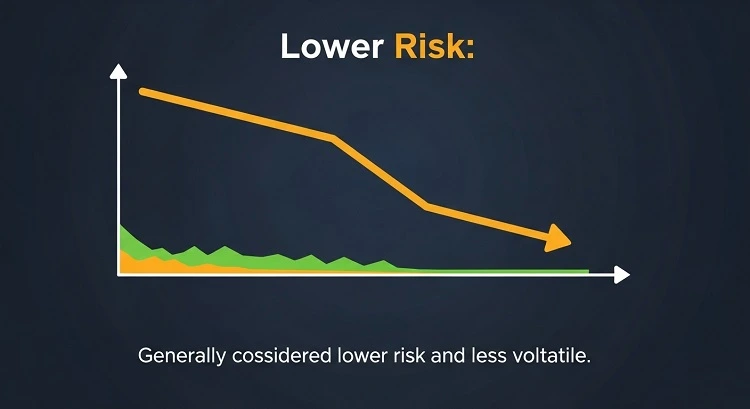
Large-cap companies tend to be more established and less volatile than smaller, younger businesses, which is why large-cap funds are often positioned as a lower-risk entry point into equity investing compared with funds focused on smaller companies or emerging markets.
Why UK Investors Choose Large-Cap Funds
Dividend Income
UK large-cap companies have a strong reputation for returning cash to shareholders. The FTSE 100 has carried a dividend yield of around 3.4%, notably higher than comparable US and European indices, making UK large-cap funds a common choice for investors seeking income alongside growth. Major dividend payers have historically included companies such as AstraZeneca, Shell and British American Tobacco, though the specific companies driving payouts shift over time.
Diversification in a Single Holding
Buying a large-cap fund spreads an investment across dozens or hundreds of companies in one transaction, reducing the impact of any single company underperforming compared with holding individual shares directly.
A Familiar Starting Point
Because large-cap companies are household names, many new investors find large-cap funds a more intuitive starting point than funds focused on unfamiliar smaller companies or specialist sectors.
Tracker Funds vs Actively Managed Funds
| Type | How It Works | Typical Cost |
|---|---|---|
| Tracker (index) fund | Aims to replicate an index, such as the FTSE 100, by holding the same companies in similar proportions | Low, often under 0.2% a year |
| Actively managed fund | A fund manager selects companies they believe will outperform the index | Higher, commonly 0.5% to 1% or more a year |
Neither approach is universally better. A tracker fund guarantees you will roughly match the index, minus a small fee, while an actively managed fund offers the possibility of beating the index, at a higher cost and with no guarantee of doing so. Many UK investors hold a low-cost tracker as a core portfolio holding and add actively managed funds selectively where they have a specific reason to believe a manager’s approach adds value.
Holding Large-Cap Funds in an ISA
Most UK investors hold large-cap funds inside a Stocks and Shares ISA, where both income and capital gains are free from UK tax. Every UK adult aged 18 or over can invest up to £20,000 in an ISA in the current tax year, spread across cash, stocks and shares, or a combination of ISA types as preferred. A pension wrapper such as a SIPP is another common home for long-term large-cap holdings, offering tax relief on contributions in exchange for restricted access until retirement age.
What to Check Before Choosing a Large-Cap Fund
- Ongoing charges figure (OCF). This annual cost is deducted from the fund regardless of performance, and even small differences compound significantly over a long holding period.
- Index or benchmark. Confirm whether the fund tracks the FTSE 100 specifically, a broader UK index such as the FTSE 350 or FTSE All-Share, or a global large-cap index with only partial UK exposure.
- Income or accumulation share class. An income share class pays dividends out to you directly, while an accumulation share class automatically reinvests them, which suits investors not yet drawing an income.
- Track record over a full market cycle. A fund’s performance over five years or more, including how it behaved during a downturn, gives a more complete picture than recent short-term returns alone.
- Concentration risk. Some indices are heavily weighted towards a small number of large companies or sectors, meaning the fund’s performance can depend disproportionately on a handful of names.
Risks Worth Understanding
Large-cap funds are generally considered lower risk than small-cap or single-sector funds, but they are not risk-free. The value of the underlying shares can fall as well as rise, and a fund concentrated in one country or one heavily-weighted sector carries more concentration risk than a globally diversified alternative. Past performance is never a guarantee of future returns, and anyone investing should be prepared to hold for the medium to long term, generally five years or more, to ride out short-term market fluctuations.
Frequently Asked Questions
What counts as a large-cap company in the UK?
There is no single fixed threshold, but in the UK context large-cap most commonly refers to companies within the FTSE 100, the 100 largest companies by market capitalisation listed on the London Stock Exchange.
Is a large-cap fund safer than other equity funds?
Large-cap funds are generally considered lower risk than small-cap or emerging market funds, due to the size, stability and trading history of the underlying companies, but they still carry standard equity market risk and can fall in value.
Should I choose a tracker fund or an actively managed fund?
This depends on your priorities. A tracker fund offers low costs and predictable index-matching performance, while an actively managed fund offers the potential to outperform the index at a higher cost, with no guarantee it will do so.
Do I need a financial adviser to invest in a large-cap fund?
Many UK investors buy large-cap funds directly through an investment platform without a financial adviser, particularly for straightforward tracker funds. A regulated financial adviser can help where personal circumstances are more complex or where broader financial planning advice is needed.
About the author: The Business To World editorial team covers practical business, banking, investment and property guidance for UK small business owners and entrepreneurs. This article is general information and does not constitute personalised financial advice.